Sammy Spider’s Tour of the Greater Palm Beaches in February 2012

Sammy Spider, the character from the beloved PJ Library books of the same name, is touring the greater Palm Beaches, visiting Jewish preschools and kindergarten classes at the Arthur I. Meyer Jewish Academy, helping children explore colors, numbers and Jewish holidays. The four-foot stuffed animal was developed at t he Lorraine & Jack N. Friedman Commission for Jewish Education’s (CJE) Department of Jewish Family Life and “brought to life” by PJ Library grandmother and master seamstress Adele Simon. Sammy has a total of nine stops on his travels.

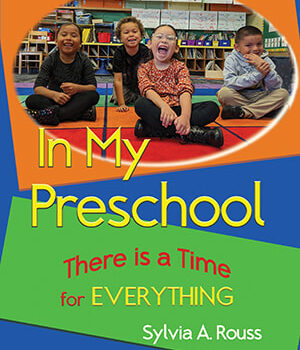
A special visit to our community by Sammy Spider author Sylvia Rouss is planned for February 2012, when she will be the keynote presenter at the Friedman CJE Early Childhood Educators Conference and headline four local storytelling family events.

Contact CJE Director of Jewish Family Life Amy Bergman at (561) 209-2608 to learn about Sammy Spider’s itinerary and get more information.


“Shalom TV Videos” of my favorite books

I am so pleased to tell you of my special relationship with Shalom TV
They have animated six of my favorite books, and you can easily link to them. 
At the top of my web page, immediately to the right of “Blog”, is “SHALOM TV VIDEOS”.
By clicking on this link or the links below, you will find the videos.  ENJOY!!!


CLICK HERE TO VIEW SHALOM TV’S VIDEO OF THE LITTLEST PAIR

CLICK HERE TO VIEW SHALOM TV’S VIDEO OF SAMMY SPIDER’S FIRST TRIP TO ISRAEL

CLICK HERE TO VIEW SHALOM TV’S VIDEO OF SAMMY SPIDER’S FIRST TU B’SHEVAT

CLICK HERE TO VIEW SHALOM TV’S VIDEO OF SAMMY SPIDER’S FIRST SUKKOT

CLICK HERE TO VIEW SHALOM TV’S VIDEO OF NO RULES FOR MICHAEL

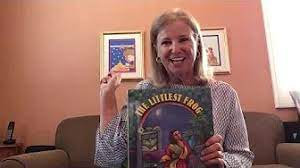
CLICK HERE TO VIEW SHALOM TV’S VIDEO OF THE LITTLEST FROG

Tu B’Shevat for Children and their Parents

Tu B’Shevat

(Background for parents by Sylvia Rouss)

Tu B’Shevat, which literally means the 15th of the month of Shevat, celebrates the new year or birthday of the trees. In the secular calendar, the holiday occurs sometime between the end of January and the beginning of February.

This holiday is celebrated outdoors. Saplings are planted, nuts and fruit are eaten, and trees are honored for what they contribute to our lives.

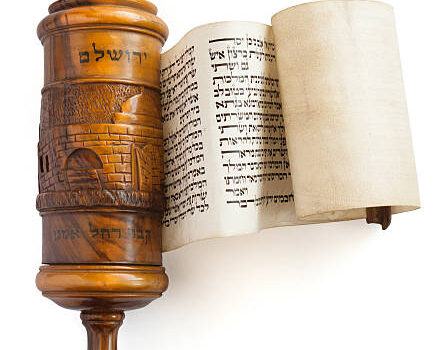
Although there is no mention of this holiday in the Torah, during biblical times farmers counted their trees for the tax assessor on this day. Later it became a tradition to plant a tree on this day to celebrate the birth of a child, a cedar for a boy and a cypress for a girl. When the child married, the branches of the tree were used to hold up the wedding canopy.

More recently, when Jews returned to resettle the land of Israel, they found the country was mostly swamp and desert. An effort was made to reforest the land and make it fertile once again. The Jewish National Fund created a campaign that encourages people to plant trees in Israel to celebrated important events. As a result, millions of trees have been replanted and continue to be planted in Israel.

The almond tree has become a symbol of Tu B’Shevat as it is the first tree to blossom in Israel after the winter season. Many other fruits indigenous to the land of Israel—figs, pomegranate, dates, carob—-are eaten as well.

CLICK HERE TO VIEW SHALOM TV’S VIDEO OF SAMMY SPIDER’S FIRST TU B’SHEVAT


ACTIVITIES FOR TU B’SHEVAT
1. Discuss where plants come from. Allow children to express their ideas. (A seed is a plant that has not started to grow. When the seed is moistened, a root starts to grow. Little roots grow from the big root, they look like tiny hairs. Soon a shoot pushes through the ground. It is the beginning of a green plant. The leaves come next, then the flower).
2. Plant seeds and let children observe the growing process.
3. Read books about plants and trees (ie: The Giving Tree, A Tree is Nice, Sammy Spider’s First Tu B’Shevat, The Littlest Tree, In My Garden, The Great Kapok Tree, The Carrot Seed, Growing Vegetable Soup)
4. Taste a variety of fruits and nuts. Compare taste, texture, appearance, smell, and listen to the sound they make when you eat them.
5. Take children outdoors and let them draw pictures of trees, flowers, and other plants.
6. Discuss how trees help us—lumber for building, fuel, shade, fruit to eat, home for birds and animals.
7. Tu B’Shevat is a good time to make children aware of the environment. Discuss ways in which to protect trees—Don’t tear bark away, don’t break branches, don’t break roots, watch out for harmful insects that hurt trees, don’t waste the resources we get from trees. Use Tu B’Shevat to create environmental awareness.


This week we have been getting ready for Tu B’Shevat, the Birthday of the Trees!!! We read Sammy Spider’s First Tu B’Shevat by Sylvia Rouss. The children love Sammy! They know a special Holiday is coming every time we read a story about him. This story talked about the seasons. We observed how different the trees looked as the seasons changed and what animals lived there and the different kinds of food the trees provided. We talked allot about all of the things that trees give to us. Our chairs, paper, snack foods, even toilet paper come from trees. We discussed how you should only use “just enough” of things like toilet paper and other disposable products. We don’t want to waste our trees! We made letter T trees for Tu B’Shevat and made a beautiful forest on our wall.  From the Society Hill Synagogue Playschool Blog

Original Songs

TREES GIVE US SO MUCH

(Sing to The Farmer in the Dell)

By Sylvia Rouss


Trees give us so much.

Trees give us so much.

Let’s say thank-you to the trees,

For giving us so much.


Trees give us their shade.

Trees give us their shade.

Let’s say thank-you to the trees,

For giving us their shade.


Trees give us their wood.

Trees give us their wood.

Let’s say thank-you to the trees,

For giving us their shade.


Trees give us their fruit,

Trees give us their fruit,

Let’s say thank-you to the trees,

For giving us their fruit.


THIS IS THE WAY WE PLANT A TREE

(Sing to Here we go ‘Round the Mulberry Bush)

By Sylvia Rouss


This is the way we plant a tree, (digging motion)

Plant a tree, plant a tree.

This is the way we plant a tree,

When it is Tu B’Shevat.


This is the way we water a tree, (watering motion)

Water a tree, water a tree.

This is the way we water a tree,

When it is Tu B’Shevat.


This is the way we trim a tree, (snipping motion)

Trim a tree, trim a tree.

This is the way we trim a tree,

When it is Tu B’Shevat.


This is the way we pick the fruit, (picking motion)

Pick the fruit, pick the fruit.

This is the way we pick the fruit,

When it is Tu B’Shevat.


This is the way we eat the fruit, (eating motion)

Eat the fruit, eat the fruit.

This is the way we eat the fruit,

When it is Tu B’Shevat.


HAPPY BIRTHDAY TO THE TREES

(Sing to Frere Jacque)

By Sylvia Rouss


Happy birthday, happy birthday,

To the trees, to the trees.

Once they were so small.

Now they’ve grown so tall.

They reach the sky, they reach sky.

RECIPES


TU B’SHEVAT FRUIT SALAD

2 unpeeled red apples

3 medium oranges

small bunch of grapes

¼ c. packed brown sugar

¼ cup margarine

1 cup sour cream

1 tsp. vanilla

Core and dice apples (unpeeled). Section oranges. Remove stems from grapes. Lightly mix fruits and ¼ cup brown sugar. Chill. Shortly before serving combine remaining sugar and margarine in a small saucepan and heat. Stir until margarine is melted and bubbles. Stir in remaining ingredients and serve over fruit. Serves 6.


MANDELBROT (Almond Cookies)

3 eggs beaten

1 cup sugar

1 cup oil

1 tsp. vanilla and 1 tsp. almond extract

1 tsp. baking powder

1 tsp. cinnamon

3 cups flour

½ cup chopped almonds

Combine all ingredients, add nuts last. Mix well. Put oil on hands and made 3 mounds of batter on ungreased cookie sheet and bake. Slice while warm, turn on sides and place on cookie sheet. Sprinkle with cinnamon and sugar mixture (in addition to what is in batter). Bake until brown, 5-10 minutes.


LEARNING GAMES

1. MATCHING SETS TO NUMBERS – Cut six slits into the lid of a shoebox. Number the slits 1-6. Cut 6 tree shapes out of construction paper, draw from 1-6 sets of dots on each tree, laminate, and glue them to craft sticks. Have children take turns “planting” the trees into the matching numbered slot in the shoebox lid.

2. MATCHING SETS TO NUMBERS – Cut five squares out of cardboard. On each square, glue a leafy tree shape cut from green felt. Write a numeral from 1 to 5 under each tree. Cut 15 small apple shapes out of red felt. Set out the tree cards and apple shapes. To play, have a child identify the numerals beneath the trees and place matching numbers of apples on the trees.

3. SPATIAL RELATIONSHIPS – Set out a large box filled with sand. Cut flower shapes out of construction paper and attach them to craft sticks. Let child plant the flowers in the sandbox as you give directions such as these: “Plant the flowers side by side in two rows, plant a flower in the corner of the box, plant one flower next to another flower, plant one flower behind another flower, plant two flowers in the middle of the box.”


SO MANY NEW FRIENDS!

Last week I had so much fun visiting all my new friends at the Kaplen JCC on the Palisades in Tenafly, New Jersey, at the Central Synagogue in New York City and at the Cooperman JCC in West Orange, New Jersey.  


We celebrated Hanukkah with Sammy Spider and the Littlest Macabee.  We sang songs and told our favorite stories.  I met almost 1000 children, teachers, parents and grandparents.  What a wonderful way to spend three days!


NEW Hanukkah Songs and more for children

ORIGINAL SONGS FOR HANUKKAH BY SYLVIA ROUSS


JUDAH MACCABEE

(Sing to Frere Jacque)


Judah Maccabee, Judah Maccabee,

Big and strong, big and strong

He was so very brave,

The temple he did save.

Long ago, long ago.


HANNUKAH, OH WHAT FUN!

(Sing to This Old Man)


Hanukkah, oh what fun!

Spin your dreidles everyone.

Twirling dreidles at your feet.

Hanukkah just can’t be beat.


Hanukkah, oh what fun!

Chocolate gelt for everyone.

Peel the foil and eat the treat.

Hanukkah just can’t be beat.


Hanukkah, oh what fun!

Have some Latkes everyone.

Latkes are so good to eat.

Hanukkah just can’t be beat.


Hanukkah, oh what fun!

March like Maccabees everyone.

Hear the sound of marching feet.

Hanukkah just can’t be beat.


Hanukkah, oh what fun!

Light the candles everyone.

See the flames and feel the heat,

Hanukkah just can’t be beat.


LATKES

(Sing to London Bridge)


Put some latkes on my plate,

On my plate, on my plate.

Put some latkes on my plate.

I can’t wa-it!


I’M A LITTLE DREIDLE

(Sing to I’m a Little Teapot)


I’m a little dreidle, short and stout,

Hold my handle and spin me about.

When I get tired watch me drop,

I fall to the floor and then I stop.

HANUKKAH RECIPES

Latkes

3 cups cubed unpeeled potatoes

2 eggs

1 small onion quartered

1 tsp. salt

3 Tbs. flour

¼ cup milk

Place eggs, onion, salt, flour, milk, and ½ cup potato cubes in a blender. Cover and blend on medium speed for 5 seconds. Add remaining potatoes and blend another 10 seconds. Fry in hot oil until brown on both sides. Serve with sour cream or applesauce.

Candy Dreidles

Marshmallows

Chocolate kisses (unwrapped)

Frosting

Licorice sticks

Spread frosting on flat side of marshmallow and attach chocolate kiss. Cut a piece of licorice and attach to other flat side for a handle.

LEARNING GAMES

  1. Patterning- Create a variety of patterns using real dreidles and candles. Ask children to reproduce the pattern.
  2. Color Match – Use real dreidles and match their colors to real candles.

Hanukkah for Parents and Children

Hanukkah: Background for parents, researched and written by Sylvia Rouss

Hanukkah is celebrated in the winter. It lasts for eight days and is also known as the Festival of Lights.

Hanukkah is based on a historical event and is a result of a conflict between the Jewish faith and Greek culture. Conquered by Alexander the Great, the Jewish people prospered and enjoyed religious freedom. In time, some Jews were influenced by the Greek ways and became increasingly Hellenized. With the death of Alexander, the Greek empire was divided between his generals into the empires of Egypt and Syria. The Jews lived in the Syrian-Greek Empire.

In the years that followed, Antiochus became the ruler of Syria. Under his rule, the Jews were forbidden to study Torah, observe Shabbat, and circumcise their male children. Idols were erected in the Jewish Temple in Jerusalem and pigs were sacrificed on its altar. Anyone who disobeyed Antiochus and his laws was killed.

Mattathias, an old priest, and his five sons led by Judah, opposed Antiochus. They gathered a small army and hid in the mountains, attacking Antiochus and his army at every opportunity. Because Judah was so strong, he became known as Judah Maccabee, the Hebrew word for hammer. The name was ultimately attributed to his entire army which managed to recapture Jerusalem and the Temple. The Temple was cleaned and rededicated.

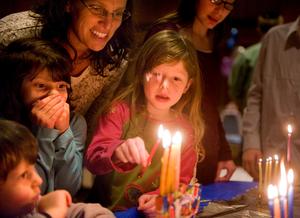
A small amount of oil was found to light the seven-branch menorah that lit the Temple. There was only enough oil to burn for one day but miraculously, it burned for eight.  As a result the Hanukkah menorah or Hanukkiyah has a place for nine lights—one for each of the eight days and a special light, the shamash that is used to light all the others. During Hanukkah, one more candle is lit each night until all the candles are lit on the eighth night.

At Hanukkah, special foods cooked in oil are eaten as a reminder of the miraculous oil.  Potato pancakes called latkes are served as well as sufganiyot, jelly donuts, a tradition that comes from Israel.

A game using a four-sided top called a dreidle is played. It is similar to a game the ancient Jews played to fool the soldiers sent by Antiochus. Since it was forbidden to study Torah, the Jews would hide the Torah and pretend to be gambling with the dreidle. Today each side of the dreidle has a Hebrew letter which stands for the Hebrew words, “A great miracle happened there.” In Israel, the last letter is different and stands for “A great miracle happened here.”

Gift giving as well as the giving of Hanukkah gelt or Hanukkah money has become a part of the tradition. An additional treat for children, is chocolate Hanukkah gelt.

Vocabulary

  • Hanukkah – Festival of lights
  • Hanukkiyah – A nine branched menorah
  • Shamash – the ninth candle on the Hanukkiyah which is on a separate level from the other candles and is used to light all the other candles
  • Sufganiyot – jelly donut
  • Dreidle – a four-sided top
  • Gelt – money given at Hanukkah

Ways to Celebrate Hanukkah with Your Child

  1. Make Hanukkah decorations for your home.
  2. Fry latkes and invite family, friends and neighbors to share them.
  3. Play a CD of Hanukkah music.
  4. Read Hanukkah stories to your child.
  5. Sing Hanukkah songs with your child.
  6. Play the dreidle game:  The dreidle has four sides with the Hebrew letters nun, gimmel, hay, shin on it. The letters stand for the words, “Nes gadol ha’ya sham” or a great miracle happened there. In Israel the letter shin has been replaced by a pay for the word po which means “here.”Players take turns spinning the dreidle. When the dreidle is twirled and falls with the letter nun facing up, each of the players puts a coin or candy in the “pot.” If the shin faces up, only the spinner puts a coin or candy in the pot. If the hay faces up, the spinner takes half the pot. If the gimmel faces up, the spinner takes all and the game begins again.

A RHYMING STORY OF HANUKKAH FOR YOUNG CHILDREN BY SYLVIA ROUSS

King Anticochus always wanted his way.

He told the Jews, “This is how you must pray!”

Judah Maccabee, a strong and brave Jew,

Said, “We won’t pray the way you want us to!”

He told King Antiochus, “You can’t stay.

The time has come for you to go away!”

The Temple was scrubbed from ceiling to floor.

The dirt was swept out the huge front door.

Then a small bit of oil was used to relight

The Temple Menorah, which lit up the night.

Let’s count the days that the oil burned, now.

Count on your fingers, I’ll show you how.

ONE, TWO, THREE, FOUR, FIVE, SIX, SEVEN, EIGHT!

NOW THAT’S A MIRACLE THAT’S REALLY GREAT!

“Intended for children between the ages of 3 and 6, “The Littlest Macabee” includes 24 wonderfully whimsical illustrations by Cohen who also created the cover art for this year’s High Holy Days supplement in the Jewish Review.The large-format storybook retells the events of Hanukkah chiefly from the perspective of an unnamed mouse whose uncommon courage in the face of the giant elephants used by the Greek soldiers helps to save the day for the Jews.” From the Jewish Review, Portland, Oregon, 12th of November 2011

Published by Pitspopany